The Northern Michigan Market Perspective

Thoughtful observations on today's market from Gordon Liechti, GRI

Area Real Estate News & Market Trends

Welcome to my blog! Here, you'll find expert insights on local real estate, including market trends, home values, community information, and financial tips to help you make informed buying and selling decisions. Whether you're a first-time buyer, a seasoned investor, or just exploring your options, my goal is to provide up-to-date, valuable content. Stay tuned for articles on market statistics, neighborhood highlights, and tips to navigate your real estate journey!

June 26, 2026

The Perfect Time Rarely Announces Itself


What I've Learned After Helping Homeowners Make Some of Their Biggest Real Estate Decisions

Every year, I meet homeowners who tell me something remarkably similar.

"We've been thinking about making a move for quite a while."

Sometimes it's been six months.

Sometimes it's been two or three years.

Very rarely does someone tell me they woke up one morning and suddenly decided it was time to sell their home.

Most major real estate decisions don't happen overnight.

They develop slowly.

A conversation over dinner.

A home that suddenly feels larger than it once did.

A desire to spend more time enjoying Northern Michigan and less time maintaining a house.

Children who have started families of their own.

Or perhaps a realization that the waterfront cottage you've loved for years is ready to become someone else's place to build memories.

After helping buyers and sellers throughout the Grand Traverse area and Northern Michigan lakefront market for many years, I've noticed something interesting.

The perfect time rarely announces itself.

Instead, people who look back most positively on their decisions usually had one thing in common:

They started planning before they started moving.


The Headlines Will Always Give You a Reason to Wait

Every month there is another headline.

Mortgage rates.

Inflation.

The stock market.

Inventory.

Election cycles.

Global events.

There will always be another reason to believe that next month—or next year—might be better.

Sometimes it is.

Sometimes it isn't.

But in my experience, the homeowners who are happiest with their decisions rarely make them because of a headline.

They make them because the decision makes sense for their family, their finances, and the lifestyle they want over the next five to ten years.


The Grand Traverse Area and Northern Michigan Continue to Tell Their Own Story

National real estate news provides helpful perspective.

But real estate has always been local.

Here in the Grand Traverse area and throughout Northern Michigan, we're continuing to see a market that has become more balanced—not weaker.

Inventory has improved modestly, yet remains below long-term averages.

Well-maintained homes continue to attract strong interest.

Lakefront properties remain highly desirable because one thing has never changed:

They're not making any more shoreline.

Buyers today are thoughtful.

They're asking better questions.

They're negotiating more carefully.

And they're making decisions with greater confidence than they were just a few years ago.

Personally, I believe that's a healthier market for everyone.


Preparation Creates Opportunity

One observation has become increasingly clear this year.

The homeowners who begin planning early almost always have more options.

That doesn't necessarily mean listing your home next month.

It might simply mean understanding:

  • What your home could realistically be worth today.
  • What neighborhoods or communities fit the next chapter of your life.
  • Whether downsizing, moving closer to town, or upgrading truly aligns with your goals.
  • What improvements, if any, would make sense before selling.

Knowledge doesn't create pressure.

It creates confidence.


From My Perspective

One of the reasons I enjoy working in real estate is that no two families are exactly alike.

Every home has its own story.

Every move has its own purpose.

Over the years, I've found that homeowners rarely regret taking the time to understand their options.

What they often regret is waiting for everything to feel perfect.

Perfect markets don't exist.

Perfect timing rarely appears.

But thoughtful preparation has a way of creating opportunities that weren't obvious at first.

If there's one lesson I've learned after years in this business, it's this:

The people who make the best real estate decisions usually aren't the ones trying to predict the future.

They're the ones who understand their own goals clearly enough to recognize a good opportunity when it arrives.


Final Thoughts

The market will continue to change.

It always has.

Interest rates will rise and fall.

Inventory will increase and decrease.

Headlines will continue to come and go.

What doesn't change is the importance of making decisions that fit your life—not simply the news cycle.

Here in the Grand Traverse area and Northern Michigan lakefront market, I continue to see thoughtful buyers and sellers finding opportunities because they're planning ahead rather than reacting.

If you've been quietly wondering what your next chapter might look like—even if it's still a year or two away—this may be the perfect time to begin the conversation.

Not because you need to move today.

But because understanding your options today often leads to better decisions tomorrow.

Gordon Liechti, GRI
The Mitten Realty Group

May 22, 2026

If You Sell Your Home… Where Do You Go Next?


A Northern Michigan Perspective on One of Today’s Biggest Real Estate Questions

For many homeowners in 2026, the decision to sell is no longer just about the value of their current home.

In fact, for many people throughout the Grand Traverse area and Northern Michigan lakefront market, the bigger question has quietly become:

“If we sell… where do we go next?”

It’s one of the most important — and often least discussed — parts of today’s market.

Because while home values have remained strong and inventory has improved modestly, many homeowners are finding themselves caught between two realities:

  • They may want a different lifestyle or home configuration
  • But they’re uncertain how to transition smoothly into the next chapter

And that uncertainty is causing many otherwise-ready sellers to pause.


The Market Has Shifted — and So Has Seller Thinking

A few years ago, many homeowners felt pressure to move quickly.

Today, the market feels different.

Across the Grand Traverse area and Northern Michigan lakefront market:

  • Buyers are more measured
  • Inventory remains below long-term norms
  • Pricing has stabilized into healthier appreciation levels
  • Negotiation has returned to many transactions

As a result, homeowners are thinking less about urgency — and more about planning.

The question is no longer simply:

* “Should I sell?”

Now it’s:

* “How would this actually work?”


The Biggest Concern Sellers Have Right Now

For many homeowners, the hesitation has very little to do with whether their home would sell.

The concern is what happens after.

Questions I’m hearing repeatedly include:

  • “Will we be able to find the right replacement property?”
  • “Should we buy first or sell first?”
  • “What happens if our home sells quickly?”
  • “Would waiting another year really change anything?”

These are thoughtful questions — especially for homeowners who have built substantial equity and are trying to make smart long-term decisions.


Move-Up Buyers Are Approaching the Market Differently

For homeowners looking to move from the $500K–$700K range into the next level of home, the process today is more strategic than emotional.

Many are:

  • Looking for more space or updated features
  • Wanting better locations or less maintenance
  • Re-evaluating lifestyle priorities after years in their current home

But unlike the urgency-driven market of past years, move-up buyers in 2026 are planning carefully.

They are asking:

  • How do we coordinate both transactions?
  • Should we prepare our current home first?
  • What level of flexibility do we need?

This is where thoughtful preparation often becomes more important than trying to perfectly time the market.


For Downsizers, This Is Often a Lifestyle Decision

For empty nesters and longtime homeowners, the conversation is often much more personal than financial.

Many are beginning to ask:

  • “Do we still need this much house?”
  • “Would condo living simplify our lives?”
  • “Should we make this move while we can fully enjoy it?”

For these homeowners, the decision is often about:

  • Reducing maintenance
  • Simplifying daily life
  • Unlocking equity thoughtfully
  • Staying connected to the Northern Michigan lifestyle they love

In many cases, the hesitation is not about the market itself.

It’s about emotional readiness for change.


Selling First vs. Buying First — There Is No Universal Answer

One of the most common questions today is whether it makes more sense to sell first or buy first.

The answer depends on:

  • Financial comfort level
  • Flexibility in timing
  • Inventory availability
  • The type of property being purchased

For some homeowners, selling first creates clarity and negotiating strength.

For others, securing the next property first provides peace of mind.

The key is not finding a “perfect” strategy.

It’s understanding the options early enough to create flexibility.


Planning Ahead Creates Opportunity

One of the most consistent patterns I’m seeing in today’s market is that homeowners who begin planning earlier tend to make smoother, less stressful moves.

That doesn’t necessarily mean listing immediately.

It simply means:

  • Understanding your equity position
  • Knowing what inventory exists in your next category
  • Thinking through timing and logistics before decisions become urgent

In a more balanced market, preparation creates options.

And options create confidence.


Final Thoughts

The 2026 market in the Grand Traverse area and Northern Michigan lakefront market continues to reward thoughtful, well-prepared decisions.

For many homeowners, the real challenge is no longer whether they can sell.

It’s understanding how to make the next move work comfortably and confidently.

This is a market that rewards:


• Planning
• Flexibility
• Clear expectations
• Long-term thinking


And in many cases, the homeowners who begin exploring their options earlier are the ones who ultimately feel the most confident when the right opportunity appears.

If you’ve been quietly thinking about your next move — whether it’s upsizing, downsizing, simplifying, or simply exploring possibilities — I’m always happy to talk through the market and help you think through your options.

Gordon Liechti, GRI

The Mitten Realty Group

 

Posted in SELLING YOUR HOME
April 29, 2026

What’s Really Happening in the 2026 Housing Market? A Northern Michigan Perspective


As we move through spring 2026, the real estate market continues to generate a steady stream of headlines — many of them focused on rising home prices, elevated mortgage rates, and ongoing affordability challenges.

Understandably, buyers and sellers alike are asking: “What’s actually happening right now?”

The answer depends on where you look. While national trends provide useful context, real estate remains highly local — and the story here in the Grand Traverse area and Northern Michigan lakefront market is more balanced and nuanced than many headlines suggest.

What the National Headlines Are Saying

At a national level, several key trends are shaping the conversation:
- Median home prices have reached record levels, recently exceeding $400,000 
- Mortgage rates remain elevated compared to the past decade, hovering near the 6% range 
- Inventory has improved in many areas, but still remains below historical norms 
- Cash transactions remain strong, accounting for roughly one-quarter of purchases 

These conditions contribute to the perception of a “challenging” market — particularly for buyers focused on affordability.

What We’re Actually Seeing in the Grand Traverse Area and Northern Michigan Lakefront Market

In Northern Michigan, and particularly within the Grand Traverse area and lakefront market, conditions are behaving differently.

Across the Grand Traverse area and Northern Michigan lakefront market:
- Inventory has increased modestly, providing buyers with more options 
- Price growth has stabilized into low single-digit appreciation 
- Days on market have normalized compared to the peak frenzy years 
- Negotiation opportunities have re-emerged in many segments 

This is not a market defined by extremes.

Instead, it is a more balanced environment where both buyers and sellers have opportunities — depending on how they approach the process.

This shift is creating a market where informed buyers and prepared sellers are finding more opportunity than the headlines might suggest.

Mortgage Rates, Buyer Behavior, and Affordability

Mortgage rates continue to play a central role in buyer decision-making.

While rates remain elevated compared to historic lows, they have become more stable — which is helping buyers plan more effectively.

In recent weeks, mortgage rates have shown some short-term movement — influenced by inflation concerns and global events — but have generally remained in the low-to-mid 6% range, keeping the market more stable than many headlines suggest.

In response, buyers in the Grand Traverse area and Northern Michigan lakefront market are adapting:
- Focusing on monthly payment rather than just purchase price 
- Considering refinancing as a future option 
- Taking a more measured and strategic approach to timing 

Affordability is still a factor — but it is being managed, not avoided.

Is This a Buyer’s Market or Seller’s Market?

One of the most common questions right now is:

“Are we in a buyer’s market or a seller’s market?”

The answer in 2026, particularly within the Grand Traverse area and Northern Michigan lakefront market, is: Neither — it’s a balanced market.
- Buyers have more leverage than they did a few years ago 
- Sellers still benefit from limited inventory and long-term equity growth 
- Well-positioned homes continue to sell, while others may take longer 

Balanced markets reward preparation, pricing discipline, and informed decision-making — rather than urgency.

Lakefront & Waterfront Property — Why It Continues to Behave Differently

One of the most consistent patterns in the Northern Michigan lakefront market is that waterfront property follows its own set of dynamics.

Because shoreline is finite, well-located lakefront homes in the Grand Traverse area and Northern Michigan lakefront market benefit from:
- Limited long-term supply 
- Strong lifestyle-driven demand 
- Consistent buyer interest across market cycles 

In many cases, these properties have continued to experience steady mid-single-digit appreciation over time, often outperforming non-waterfront homes. Buyers in this segment are typically less reactive to short-term market changes and more focused on long-term ownership and lifestyle value.

What This Means for Buyers and Sellers Right Now

For buyers in the Grand Traverse area and Northern Michigan lakefront market:
• More inventory means more choice 
• Negotiation leverage has improved 
• Timing decisions can be more strategic 

For sellers:
• Pricing accuracy is critical 
• Preparation and presentation matter more than ever 
• Well-positioned homes continue to perform strongly 

Another dynamic I’m seeing right now is that some buyers are quietly revisiting properties they’ve been watching for a period of time. With more balanced conditions and increased negotiation flexibility, homes that may not have felt attainable a few months ago can sometimes present new opportunities.

If there’s a particular property you’ve had your eye on, this may be a worthwhile time to take a second look and evaluate what’s possible in today’s market.

Final Thoughts

The 2026 real estate market is not as simple as the headlines suggest. Here in the Grand Traverse area and Northern Michigan lakefront market, the environment is:
• More balanced 
• More strategic 
• More opportunity-driven 

This is a market that rewards understanding — not urgency. Buyers and sellers who understand these dynamics — and make decisions based on local conditions rather than national noise — are often in the best position to succeed.

If you’d ever like to talk through how the current market applies to your situation, I’m always happy to provide perspective.

Gordon Liechti, GRI 
The Mitten Realty Group 
Posted in BUYING A HOME
April 27, 2026

Car Wash Approved for Front Street


By Beth Milligan | April 22, 2026

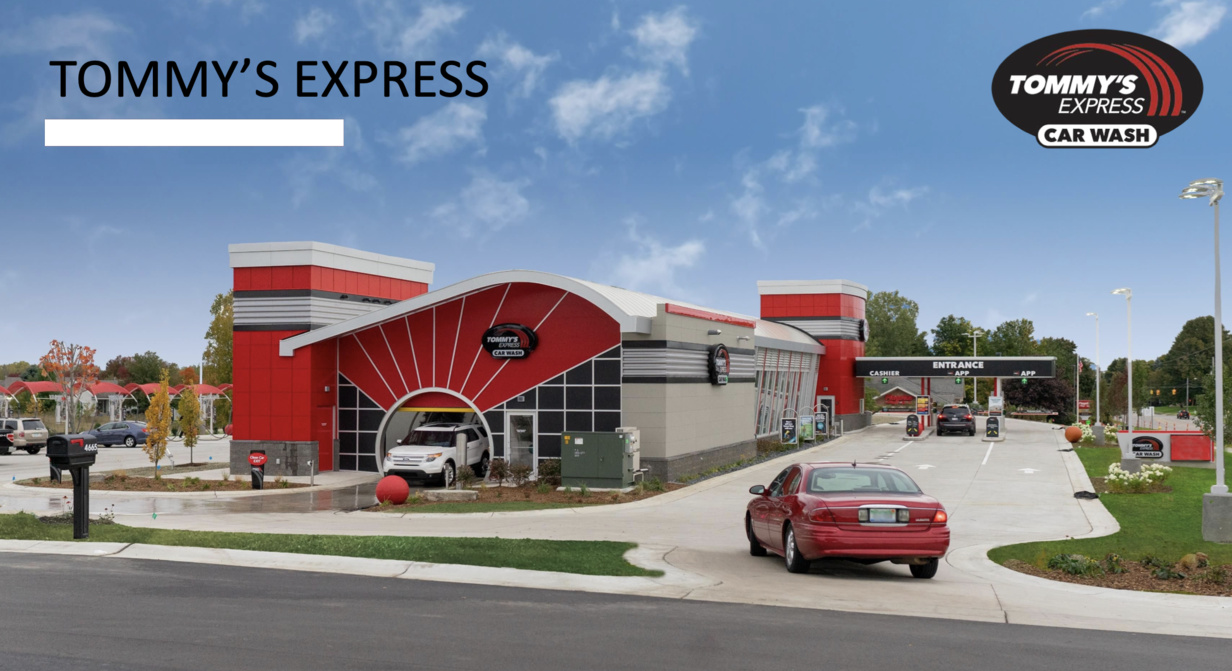
Traverse City planning commissioners voted 8-1 Tuesday to approve a new Tommy’s Express Car Wash to go in at the corner of East Front Street and Garfield Avenue on the Cuppa Joe and former Burger King properties. Multiple commissioners said they were “reluctantly” approving the plans since car washes are an allowed use by right, leaving the board with little recourse to reject the proposal. Planning commissioners are now expediting an update to zoning rules that would require a special land use permit for car washes and gas stations going forward, giving the city more say over such projects in the future.

Tommy’s Express, which bills itself as the fastest-growing car wash franchise with over 270 locations, plans to build a 5,484-square-foot car wash along East Front Street with 11 vacuum spaces and a mat-washing building behind. The company, known for its red-and-white buildings with matching red car brushes, also has locations in Cadillac and Gaylord. Tommy’s Express touted its “environmentally friendly” business model, “efficient processing,” and “world-class facility and operations” in its application.

Bret Docter, vice president of real estate for the Holland-based company, said the Traverse City location will be one of its corporately owned stores. Those car washes typically have hours of 7am-9pm, he said. In response to concerns about noise impacts on surrounding homes, Tommy’s Express agreed to conditions that include installing a five-to-six-foot screening wall and fast-growing vegetation, such as hybrid willows, that can help absorb sound. Planning Commissioner Brian McGillivary pointed out the car wash must comply with the city’s noise ordinance, so if there are violations or the sound produced exceeds city standards, residents can file a complaint.

Since a car wash is a use by right in the C-3 district, it would normally be reviewed internally by staff without coming to the planning commission. However, because the business will generate more than 500 trip ends per day, that triggered a requirement for it to be reviewed by the board. Planning commissioners tabled the application earlier this year over traffic concerns. They requested a traffic study be completed for the project, with the city hiring Wade Trim to complete the study.

Wade Trim found that the site can operate at an “acceptable level of service” during peak hours and has adequate space on the property for vehicle stacking. Tommy’s Express said it has a “unique, high-capacity design and proven efficient layout” that allows its car washes to process more than 200 vehicles per hour, so queuing is rarely an issue. However, Wade Trim made two key traffic recommendations: eliminating the Garfield entrance to the car wash, and making the Front Street driveway right-in, right-out only.

Tommy’s Express accepted those conditions for its site plan. While a believed safer configuration, some planning commissioners noted that that entrance/exit set-up will also put stress on the alley, which will likely see a high number of vehicles using it a secondary entrance/exit point to the car wash. Docter said the company plans to pay to improve the alley prior to opening. However, future maintenance would typically be an expense shared by the city and surrounding property owners under the city’s special assessment district policy.

Tommy’s Express previously highlighted that it uses an “advanced water reclaim system which not only uses up to 60 percent less fresh water than washing at home, it also keeps 100 percent of used water out of the storm system.” That system is notable given the Traverse City location sits one block south of Grand Traverse Bay. Planning commissioners pressed that issue again this week, with company representatives assuring the board that anything released in the city sewer system will have been treated first. City Attorney Lauren Trible-Laucht reminded planning commissioners the city has a wastewater discharge ordinance and tests for certain chemicals at the plant, with Tommy’s Express required to comply with state and federal regulations regarding its wastewater.

Having “exhausted all options” regarding their objections, Planning Commissioner Jerry Swanson said the board was required to approve the project. “Just because we don’t like something doesn’t mean we can vote no,” he said. “I think that’s unfortunate…we have to remember our role, and also how do fix this moving forward.” McGillivary agreed. While he said he wasn’t criticizing Tommy’s Express as a company – “it’s probably going to be the best car wash we’ve seen up here,” he said – he also said he disliked the project. “If it was up to me, I’d say no, but my discretion is limited here,” he said.

McGillivary said he previously opposed a new Shell station on Munson Avenue and had flagged concerns at the time about such auto-centric uses proliferating in the city. “The city commission and the planning commission at the time ignored it,” he said. “It seems like now that it's moved west of Garfield, we're giving more attention to it.”

Planning commissioners are now in the process of expediting updates to zoning rules regarding auto-centric uses. They will hold a public hearing in May on changing businesses like gas stations and car washes from a use by right to a special land use permit (SLUP). That’s the same approach communities like East Bay and Garfield townships have been eyeing to have more control over data centers. SLUPs add several more approval steps than a use by right, including public hearings at both the planning and city commission levels and a detailed list of standards that projects must meet to be approved.

Beyond just changing auto uses to an SLUP, the planning commission is getting ready to undertake a zoning rewrite that could also update the design standards and allowed locations for such businesses, among a wide variety of issues that would be addressed in a rewrite. That process will take significantly more time, however, with planning commissioners calling the immediate SLUP change a “Band-Aid” that will give the city more control over such projects in the meantime. The Tommy’s Express project helped highlight “how important the rewrite is,” said Planning Commissioner Shea O’Brien.


Pictured: Rendering of a typical Tommy's Express Car Wash


April 27, 2026

U.S. CRE Pricing Posts Strongest Annual Gains Since 2022


U.S. commercial property prices in March posted their strongest annual gain since late 2022, with the RCA CPPI US National All Property Index rising 2.1%, MSCI Real Assets said Thursday. On a quarterly basis, the index rose 1.1%, implying a faster annualized pace of growth of 4.7%.

“Commercial property pricing has so far proven resilient against a more uncertain backdrop, with war in the Middle East adding a new layer of caution to the investment environment,” reported MSCI Real Assets. Both transaction volume and pricing improved in the first quarter, reflecting continued investor appetite for select assets.

Suburban office prices rose 5.1% year-over-year, while CBD prices gained 1.4%, with both segments posting their highest annual growth rates since Q1 2022. Apartment prices were flat from a year earlier in Q1, while retail prices declined 1.2%. The industrial index rose 2.3% YOY and remains the only major sector to have posted positive returns since the onset of higher interest rates.


April 24, 2026

Construction by the Numbers: Northern Michigan building leaders break down the latest data

By Kierstin Gunsberg

April 2026

Two years ago, we took an analytical look at the state of housing construction across northern Michigan with Lauren Tucker, executive officer of the Home Builders Association (HBA) of Northwest Michigan, digging into data to get a clearer post-COVID snapshot of the industry. Now, as another construction season ramps up, Tucker and other leaders share updated numbers — from permits and job growth to timelines, lumber supply and what to expect heading into summer 2026.

Education and job landscape

12 percent: That’s how much job growth NMC’s Construction Technology Program Coordinator Carolyn Andrews estimates the NoMi region has seen since 2020. “Especially around Traverse City,” said Andrews, adding that a boom in residential building and recent infrastructure investments – which includes the city’s upcoming $4 million-plus reconstruction of Slabtown’s Monroe Street – are big factors in the increase. That’s good news for students in NMC’s construction programs, which partner with the HBA of Northwest Michigan, Builders Exchange of Northwest Michigan and several contractors to fill out job-site opportunities and connections for their cohorts. 

178: The current number of regional job openings for construction laborers, while demand for carpenters (129 current openings) and HVAC mechanics (52 current openings) is expected to grow, too. With spring’s busy construction season upon us, there’s still not enough skilled workers to fill the talent gap, explains Andrews, noting that even as NMC graduates fresh contractors into the field, a larger number of workers are retiring. “There aren’t enough new people entering the trades,” she said. 

58: Median age of licensed builders in the state, per 2025 data from the Home Builders Association of Michigan. With 42,206 total licensed builders in Michigan, the majority of them (23,586 to be exact) are 56 and older and coming up on retirement, with those aged 18 to 55 totaling 18,620.

$27.60: The mean-hourly wage of Traverse City’s workforce employed in the “construction and extraction” occupational category (a broad term for trade and labor workers) according to the latest numbers reported in 2024 by the National U.S. Bureau of Labor Statistics. That’s about 10 percent less than the reported national average of $30.73, or roughly $6,500 less per year for full-timers. While there’s job opportunities aplenty up here – and higher wages compared to smaller Michigan communities – competitive pay still lags compared to the rest of the country.

Tucker

Residential red tape

Zero: How many changes have been implemented to the Michigan Residential Code (MRC) since updates were meant to launch last year. “We are still operating under the 2015 [version],” said the HBA’s Tucker. Changes to the code, which includes standards that could crank up new home prices by another $15,000, have faced flack from industry leaders. A lawsuit filed by the HBA of Michigan paused those updates in July. In the meantime, Tucker says it’ll likely be another two years before any changes come into play. Meanwhile, a new commercial residential code was adopted in 2025. 

435: Single Family Home (SFH) permits submitted last year in Grand Traverse County. That’s a solid jump from the 279 new SFH permits in 2023. But for Leelanau and Benzie counties, those permits have actually dipped – Leelanau’s from 208 in 2023 to 128 in 2025, and Benzie’s from 129 in 2023 to 116 in 2025. 

2.8 percent: Reduction in SFH permits that the HBA of Michigan forecasts for this year. Tucker, who notes an increase in multi-family units being built locally, thinks the downward trend on new SFHs could be a mix of industry factors (like increasing construction timelines) and economic factors. There’s no debate that homeownership is becoming less and less accessible to younger markets, with the average age of first time home buyers reaching 40 recently. It was 35 just three years ago. And though mortgage rates have fallen slightly over the last year, “mortgage rates will continue to be the single biggest factor contributing to new home affordability,” said Tucker. And, consequently, they’ll continue to nick at how many new SFH permits are requested this year. Though, Tucker notes, northern Michigan probably won’t be quite as impacted by the rest of the state, since the area attracts more cash buyers, even when it comes to new construction. 

$475,024: The estimated average market value of brand-new SFHs built in Michigan last year. That’s up 6.5 percent over the prior 12-month period which averaged $445,864. 

Costs and timelines

12 to 18: That’s how many months the current surplus of fire-salvaged Canadian lumber is expected to last — a glut that’s actually helped ease building costs. Last year’s Canadian wildfires burned more than 20 million acres of forest, killing millions of trees still standing, still useable trees. “Lumber companies harvest this lumber and produce a surplus, lowering the cost of importing,” said Tucker. So, “even with tariffs, [it] keeps the cost flat.” Material supply, she adds, is pretty stable, and U.S. tariffs on Canadian lumber aren’t expected to hugely impact 2026 costs since most softwood production is domestic anyway. The biggest variable for this year is interest rates, says Tucker. If those continue to fall, more buyers are likely to enter the market, pushing housing starts and material costs higher. For now, though, the lumber market has been flat and, she said “the outlook remains remarkably flat.”

90 percent: How much construction timelines have grown since interior designer Paige Maurer first started in the industry 12 years ago. Back then, “it was achievable to start a new build in the late summer or early fall, around Labor Day, and have it completed by early June or the 4th of July,” said Maurer. These days, larger, more elaborate builds, delayed supplies and labor shortages have extended those timelines from around 10 to 12 months to 18 to 24 months. 

Haselton

3,000 to 5,000: The average square footage of the new construction builds that Maurer, who specializes in luxury and custom projects, is seeing for this year. That’s not a big change from last year, she says, but while the size has stayed consistent she’s seeing more of that square footage dedicated to outside spaces like “screened porches, large decks, pools and saunas.” 

Five: Newly built single-family homes currently listed at or below $320,000 across the Greater Grand Traverse and Leelanau areas – a sliver of inventory in what developer Josh Haselton calls northern Michigan’s “missing middle.” It’s the price point where many families can realistically picture homeownership, if they can find something to buy. That’s another number that hasn’t shifted much over the last couple years. “I believe that this number is still floating around $300,000,” said Haselton. “Interest rates are softening which gives a little relief on the monthly payment for this ‘missing middle’ customer.”

Two years ago, Haselton’s firm, Northern Den Development, built exclusively for that market, breaking ground on Thrive TC, 26 three-bedroom, 1.5-bath condo units priced between $293,500 and $305,900 and built in partnership with NMC construction majors on Traverse City’s south side. With Thrive completely sold out, he’s now building Willow’s Way, a 48-unit development on Traverse City’s west side that’ll be similar to Thrive, including remaining in that $300,000 price point. And, though none of Willow’s units have been listed yet, “of the first eight units available, we already have five sold,” said Haselton.

April 7, 2026

Short's Brewing & Keen Plan a New Future for Logan's Landing

By Beth Milligan | April 7, 2026

Short’s Brewing Company is finally coming to Traverse City. Its new home – the east side of Logan’s Landing on South Airport Road, which the company has jointly purchased with Keen Technical Solutions – will see millions in new investment pour into a site locals have long desired to see revitalized. The Ticker has an exclusive first look at the property plans, including a targeted spring 2027 opening for a new Short’s taproom with a riverside tiki bar.

Tim Pulliam of Keen Technical Solutions and Scott Newman-Bale of Short’s Brewing Company sat down to discuss the companies’ purchase of the site, a deal they finalized March 16. The partners now own the entire east side of Logan’s Landing, including the parking area. Short’s Brewing Company is planning to use about 10,000 square feet of the 16,000-square-foot site, including a 1,600-square-foot deck. Multiple existing tenants including Vince’s Jewelers will stay for now in the remaining space, with room to accommodate future new uses.

Vince Amroian, who owns the jewelry store, sold Logan’s Landing East to Keen and Short’s after owning it for over a decade. Multiple potential buyers have come and gone, but Amroian says it was “worth the wait” to make this particular deal.

“The right people bought it,” he says. “This is the best thing that’s ever happened to this property. We’re not going anywhere – we’ve signed a great lease and are looking forward to their endeavors here. We have the dream team now.”

Pulliam, who is also developing the nearby Mill District property on Woodmere Avenue, is passionate about the placemaking potential around the Boardman Lake Loop Trail. Like other locals, he remembers the heyday of Logan’s Landing when businesses like Auntie Pasta’s drew big crowds on evenings and weekends. Pulliam started dreaming in recent years about bringing the property back to life.

On a recent bike ride, Pulliam brought Short’s founder Joe Short to Logan’s Landing and said, “Could you imagine a bar here on the river?” That set the wheels in motion. Newman-Bale says Short’s – which has been approached “twenty to thirty times” over the years to come to TC and once “heavily looked” at The Village at Grand Traverse Commons – saw a unique opportunity to do something “cool and exciting that could help shape the community.” In December, the partners “quickly” reached an agreement to purchase Logan’s Landing East, Newman-Bale says, with Pulliam estimating the timeline at just a few weeks.

With the property now secured, the partners are ready to take action. Newman-Bale says Short’s plans to develop a taproom with on-site brewing, food service, and indoor and outdoor seating that will include a riverside tiki deck that could potentially host live music and other events/entertainment. The combined indoor-outdoor space will be able to hold a few hundred people, he estimates. The taproom is targeted for a spring 2027 launch, with significant remodeling work planned for the fall and potential “pop-ups” occurring between now and next year’s opening, Newman-Bale says.

From there, there’s room for additional future uses/tenants to come online, potential expansion of the outdoor area, and improved connections with the west side of Logan’s Landing, which is under different ownership. The bridge connecting the two sides is in disrepair and blocked off to pedestrians, but Newman-Bale and Pulliam hope that could change in the future. “We hope we can create inspiration and collaboration for like-minded uses to occur across the river,” Pulliam says.

One of the major challenges with Logan’s Landing has been that it’s grandfathered in as a nonconforming structure and thus faces restrictions on its redevelopment under today’s zoning code, including river setbacks. Those regulations have stopped other buyers from being able to come in and, for example, convert the site to luxury condos or a brand-new commercial development. However, Pulliam and Newman-Bale say the property can still be revitalized for those with the patience – and long-term vision – to work within the existing parameters.

“To do it in a way that’s sustainable and not just about immediately maximizing profit does take longer, but it has much more of a community feel in the end,” says Newman-Bale. Pulliam agrees. “The goal is just not to lose money,” he laughs. “If it’s something the community wants, that will be its success.”

The partners have met with Garfield Township officials and say they’re allowed to invest in updating the existing structure so long as they don’t change the site’s footprint. While Short’s and Keen generally can’t build up or out, they can rehabilitate the existing building. The partners plan to invest several million dollars over a multi-year period into updating the property, ranging from roof repairs to new paint to improving the deck.

Township Planning Director John Sych affirms that approach. The owners can “make improvements to keep (the property) in usable operation and maintain the buildings,” he says. Garfield Township could also offer potential “flexibility in dimensional standards in terms of the setback” for future growth through a planned unit development (PUD), or a zoning plan tailored to a specific property. A PUD generally gives developers more flexibility in exchange for offering community benefits on a site. Sych says the township would likely want to see “improvements along the riverfront” as part of the PUD and have the owners of both sides of Logan’s Landing covered in the plan so the property is developed “cohesively.”

The new development comes at a time when Garfield Township is already studying the future of Logan’s Landing and the South Airport Road corridor. Township officials have long discussed the need to potentially raise South Airport Road – which sits in a floodplain near Logan’s Landing – and create some type of crossing that could restore a more natural flow to the Boardman River. There’s a “working group” looking at the area, Sych says, including partners like Grand Traverse County (which owns Medalie Park at Logan’s Landing) and businesses along the corridor. Both Newman-Bale and Pulliam say they’re excited to be part of an effort to bring new energy to Logan’s Landing and the Boardman Lake Loop Trail district.

“The goal is really to be a catalyst with this project and the Mill District project to create activation around the entire loop,” Pulliam says. “It’s such a beautiful natural area around the lake and has such a cool history in our town. We’re getting away from its old industrial roots toward something that’s more beneficial for the entire community.”


Photo credit: David Weidner

April 7, 2026

Developments Move Forward in Boardman Lake District


Developments Move Forward in Boardman Lake District

By Beth Milligan | Nov. 23, 2025

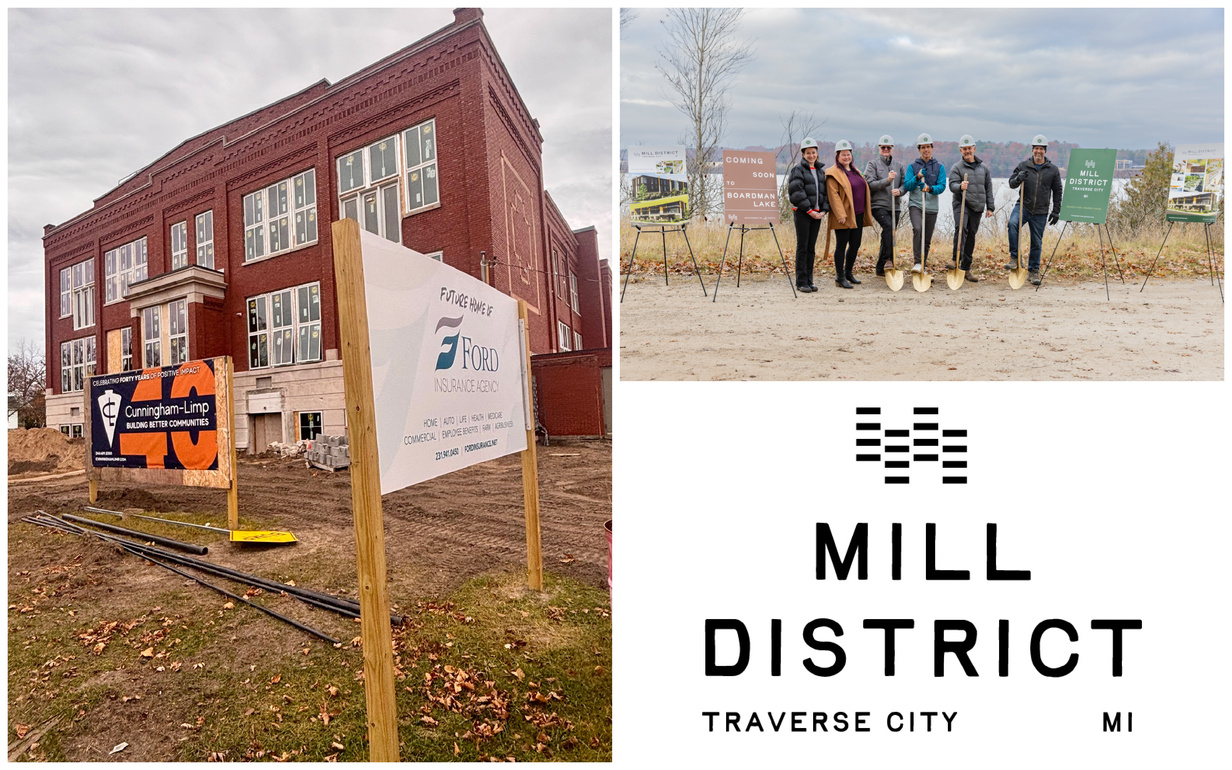
Two major mixed-use developments are moving forward in the Boardman Lake district, with a groundbreaking held Thursday for the new Mill District project off Woodmere Avenue and spring occupancy targeted for the first tenants of the redeveloped TCAPS administration building on Webster Street.

The Mill District
After Traverse City commissioners voted in August to approve a planned unit development (PUD) – a zoning plan tailored to a specific property – for a new project called the Mill District at the corner of Woodmere Avenue and Carver Street, developers held a ceremonial groundbreaking on the site Thursday.

Owner Tim Pulliam of Keen Technical Solutions and his partners plan to construct four new buildings on the property along Boardman Lake, including one commercial building and three residential buildings. Thursday’s groundbreaking marked “the official transition from demolition into the construction phase as the team prepares to begin foundational work in the coming weeks,” according to a project release.

The commercial building is the first planned to be built, with a targeted March 2027 grand opening. The building will serve as the new headquarters of Brick Wheels – relocating from its current home on Eighth Street – as well as a new coffee shop and restaurant. Brick Wheels and the coffee shop are expected to start operating first that spring, while the restaurant should open by summer 2027, according to Pulliam. “The restaurant group has been selected,” he tells The Ticker. “I can't share who quite yet, but I'm very excited for the concept and it will fit well with the vision we are trying to create.”

The first building will include a handful of residential units, though “the exact mix isn't finalized,” says Pulliam. “The next phases will have additional market-rate housing and retail spaces as well. It’s important to us that the businesses in future phases are complementary and additive to the community around us, as well as the folks we hope to attract for the residential component.”

The developers unveiled a new brand and logo for the Mill District Thursday, which is built off a concept of “Shared View, Shared Vision.” According to the release, the development will blend “thoughtful architecture with trails, green space, and local experiences that honor the region’s character while supporting a vibrant and active future.” Pulliam, who previously described the property as a planned “adventure hub” offering a range of experiences from lakeside food/drink to bike rentals to improved public connections to the Boardman Lake Loop Trail, says his goal is for the Mill District to serve as a “catalyst project that energizes” the entire loop and surrounding neighborhoods.

Amenities developed in conjunction with the project include new non-motorized trail connection from Carver Street to the Boardman Lake Loop Trail, sidewalk along Carver Street, and the paving of Sheffer Street with public on-street parking. Andy Weir, who purchased Brick Wheels in 2022, says moving into the Mill District “feels like the start of a new chapter” for the decades-old business. “I am excited to help shape a place that celebrates movement, connection, and everything we love about Traverse City,” he says.

TCAPS Admin Building
A five-minute drive from the Mill District, progress is underway on another mixed-use development at the north end of the Boardman Lake district.

Developers Ken Richmond and Eric Gerstner are targeting spring occupancy for the first tenants of the redeveloped TCAPS administration building on Webster Street. The school district approved selling the historic building in late 2023 to the duo, who emerged with a late offer with the goal of saving rather than demolishing the structure. Residents in Boardman Neighborhood strongly advocated for the building’s preservation. Local firm Cunningham-Limp is overseeing the construction project.

The redeveloped building is being set up as a condominium association with six owner groups: Richmond and Gerstner will retain oversight of 12 workforce apartments on the lower floor, Ford Insurance has purchased the middle floor (with MSU Extension a planned co-tenant), and three of the four market-rate condos planned for the top floor have already sold (realtor Jen Gaston represents the last unit for sale). While the entire building must at least meet code before anyone moves in, Richmond says the top two floors will be occupied first this spring while final painting and interior work occurs on the workforce apartments.

Potential apartment tenants will likely be interviewed this spring ahead of a targeted summer occupancy, Richmond says. The developers received city approval for a brownfield plan to support targeting units toward tenants earning between 60 to 100 percent of the area median income (AMI), which Richmond says is currently about $69,000. Unit sizes vary from studios up to two-bedroom apartments. The apartments proved the trickiest part of renovating the structure, as basement excavations required a “heavy lift” to address foundation issues, Richmond says.

“We’ve worked really hard to utilize very square inch of that building,” he says. “In the last two weeks we turned a corner, so now we can scream forward on the basement.” While the apartments are partially subgrade, the developers designed the units with nine-foot ceilings and large windows at chest height to maximize light, Richmond says.

Despite some challenges, Richmond says historic structures like the TCAPS building were constructed with “spectacular” materials that provide “way more building for the dollar than what you get with a new building.” The team has done their best to utilize those materials while updating the building with modern features that still fit the character of the site, Richmond says. For example, while upper-floor balconies will be the most noticeable change to the exterior, Richmond says “they’ll feel maybe like the stairways you’d see at Building 50.” He hopes to open the building in the spring to neighborhood residents to tour before tenants move in.

“It’s like a new and improved version (of the building),” he says. “It’s 100 years old, and I think what we’re doing will give it another 100 years of usable life.”

April 7, 2026

Smart Moves and Big Mistakes for Home Buyers and Sellers


Smart Moves and Big Mistakes for Home Buyers and Sellers

Local real estate experts share their advice
By Art Bukowski | April 4, 2026

It can be a jungle out there for those looking to buy or sell a home in northern Michigan. Even though the market has backed off those truly crazy days driven by very low interest rates a few years ago, it’s still a very competitive space where it’s best to have all of your ducks in a row if you’re planning to buy or sell.

Northern Express asked four local real estate agents to provide some big mistakes and smart moves for buyers and sellers alike. The panel includes Troy Daily of  REMAX Bayshore; Bart Ford of Coldwell Banker Schmidt; Mike Annelin of Century 21; and Hillary Voight of Found Realty.

Smart Moves for Buyers

Ford: Smart buyers do a lot of research on the area in which they are buying and ask tons of questions. Is there a glut of listings to choose from in the area, making it a buyer's market? Is there a shortage of inventory that has created a seller’s market? Will my agent be aware of any “off market” opportunities that have yet to hit the market? Are short term rentals allowed where I’m buying? How are the schools? What have similar properties sold for in my target market? Do I have reserves for large, unexpected expenses? The more questions, the better.

Voight: Get ahead of the competition. If a property feels right, this can be an opportune time to purchase. The buyer pool will only grow as interest rates drop and northern Michigan heads into the busy season. Buyers who act while the majority of other buyers wait on the sidelines will often benefit from better flexibility of showings, favorable inspection periods, and generous negotiation opportunities. Getting ahead of the competition also provides buyers with more time to make strategic and confident decisions.

Annelin: It seems obvious, but PLAN! If you are even remotely thinking of making a move, plan ahead. Visit a bank, have an idea of what you honestly feel comfortable spending. If you own a house currently, have your agent visit and give you a general sense of what you will actually net from the sale. I see it time and time again where a house comes available that a client wants to buy, but they are not prepared. It causes a ton of stress for everyone and does not put the buyer in a strong position when it comes to negotiations.

Daily: View a property as a long-term asset, not just a lifestyle purchase. In northern Michigan, two homes at the same price point can have very different long-term values depending on location, year-round usability, maintenance needs, and future resale appeal. Whether someone plans to relocate here or buy a place they can enjoy over time, the smartest buy usually keeps the most options open.

Big Mistakes for Buyers

Ford: The biggest mistake I see from buyers is trying to time the market. Your interest rate is never going to be zero. The house you buy will never be perfect, even if you build one. It is nearly impossible to sell in a seller’s market and turn around to buy in a buyer’s market. Don’t let a great opportunity pass you by based on perfect timing. 

Daily: One big mistake buyers make is focusing too much on the purchase price and not enough on the full cost of ownership. In this market, taxes, insurance, utilities, association fees, deferred maintenance, and future improvements can significantly change the math. That is true whether the property ends up being a primary residence, a second home, or part of a longer-term investment strategy. The buyers who win are the ones who know their numbers before they fall in love with the house.

Annelin: Don’t feel like you need to see more houses if you really like the first house you see. Buyers have more tools than ever to see houses before actually visiting in person. In reality, most buyers have already investigated and ruled out a lot of houses before they actually get in the car. Don’t regret not making a move on what you really know is the right house.

Voight: A common mistake buyers make is not thinking of the sellers’ needs. Both the buy side and sell side experience mixed emotions during a real estate transaction. Rather than being combative in the negotiation process, it’s a much better strategy to craft an addendum with a touch of hospitality while maintaining the mindset that the closing should feel collaborative.

Smart Moves for Sellers

Ford: Offer a healthy buyer’s side commission. This will entice a professional buyer’s agent to show your property and sell it to their qualified buyer. I’m a big fan of chasing the market up as opposed to chasing it down. If your agent believes your home is worth $500,000 do not list your home for $575,000. You will just end up reducing the price and probably sell it for less than $500,000. This process also takes a long time, wastes money, and causes pain and unwarranted stress. List the property for $499,900 and maybe you’ll get $525,000. Above all else, make sure your home is clean!

Daily: Positioning your property around both lifestyle and long-term value. Today’s buyers aren’t just shopping for a home, they’re thinking about flexibility. It might be a place they use now, relocate to later, or hold as an investment. The listings that stand out are those that clearly communicate year-round livability, updates, utility costs, and overall ease of ownership.

Annelin: Finish all of the little projects: the touch-up paint, the missing trim or baseboard, the closet doors that keep falling off the track. A house that is well kept is a house buyers want to buy. Also, make a detailed list of all the improvements you have made and the year in which they were done. The more robust and detailed the list the better. The cost of materials and labor continues to increase, and buyers are seeing more value in homes that have improvements made already. 

Voight: Decluttering isn’t just marketing—it builds buyer confidence. A home filled with personal items can make buyers question whether possession will actually happen on schedule. Preparing early not only reassures buyers, but it also reduces last-minute stress for sellers. Pack items knowing the home will sell. The “act as if” mentality truly works—whether you call it manifesting or being type-A prepared—and it’s going to serve a seller well. 

Big Mistakes for Sellers

Ford: Selling your home without a Realtor. A great listing agent is invaluable to a successful transaction. Exposing your home to as many buyers as possible is the best way to sell your home for the most amount of money in the shortest amount of time. This is my goal every time. Most “for sale by owners” are willing to pay a buyer’s agent but have a hard time justifying their agent’s fee. A great listing agent will provide a ton of guidance and will protect the seller leaving any money on the table. Listen to the professionals!

Daily: One big mistake for sellers is assuming desirability alone will carry the deal. Northern Michigan is absolutely a place people want to be, but buyers still pay close attention to value and monthly cost. When a property is priced based on emotion or peak market expectations instead of today’s reality, it can lose momentum quickly. The strongest sellers understand that buyers are still excited about the area, but they are also doing the math. Pricing a house correctly is super important right now.

Voight: A mistake sellers make is choosing an agent based on social media presence rather than authentic professionalism. I’ve never had a seller ask during a pitch while interviewing multiple agents: “If I called the last two agents you worked with, what would they say about you?” Yet this question is gold. Real estate is cooperative, and seamless transactions happen when agents maintain strong, respectful relationships with their peers. An agent’s reputation among other brokers often speaks louder than marketing. Choosing someone known for professionalism, work ethic, and positive relationships can make a real difference.

Annelin: This one seems obvious, but it’s important: Price the house competitively for the market. An overpriced house almost always ends up selling for less than it should have, compared to pricing it correctly from the beginning. Pricing a house is not the easiest task, and everyone misses from time to time, so if you have a house that has been listed for a little while without offers, adjust accordingly. 

March 23, 2026

Selling in 2026: Pricing, Preparation & Strategy in the Grand Traverse Spring Market

As we move toward the spring real estate season in Northern Michigan, sellers in Grand Traverse County are entering a market that rewards clarity, preparation, and pricing discipline.

The urgency of previous years has eased, but buyer demand — particularly for well-located and lakefront properties — remains steady. The difference in 2026 is that buyers are more selective, more informed, and more deliberate in their decisions.

For homeowners considering selling this year, understanding this shift is key.


The 2026 Spring Market — What Sellers in Grand Traverse Are Facing

Inventory has improved modestly compared to historic lows, but it remains below long-term averages.

Across Traverse City and the surrounding areas:

  • Median pricing has remained stable, with modest year-over-year gains
  • Days on market have normalized compared to peak pandemic conditions
  • Buyer activity remains steady, even through the winter months

This is not a declining market — it is a more balanced one.

Balanced markets reward preparation and strategy.


Market Uncertainty and What It Means for Sellers

Recent volatility in the stock market, geopolitical tensions, and fluctuations in energy prices have introduced a level of uncertainty for some buyers — particularly at higher price points.

These factors can influence mortgage rates and short-term buyer confidence.

That said, in Northern Michigan — and especially within Grand Traverse and lakefront markets — demand continues to be driven largely by lifestyle decisions, long-term planning, and limited waterfront supply.

While some buyers may take a more measured approach, well-prepared and properly priced homes are still attracting strong interest as we move toward the spring season.


Pricing Strategy Matters More Than Timing Alone

Spring often brings increased activity, but pricing remains the most important factor in determining results.

In today’s market:

  • Overpriced homes tend to lose early momentum
  • Buyers are comparing options more carefully
  • First impressions carry significant weight

Homes priced correctly from day one typically:

  • Generate stronger early interest
  • Spend less time on market
  • Avoid repeated price adjustments
  • Achieve stronger overall outcomes

The goal is not to “test the market,” but to position your home where buyers recognize value immediately.


Preparation Is a Competitive Advantage in 2026

Buyers in today’s market expect condition, clarity, and confidence.

Preparation doesn’t necessarily mean major renovation. Often, smaller strategic improvements deliver the strongest return:

  • Decluttering and staging to highlight space and views
  • Addressing minor repairs and deferred maintenance
  • Providing clear documentation of improvements
  • Ensuring systems and mechanicals are well maintained
  • Enhancing curb appeal and access points

Homes that feel “ready” tend to stand out — and that translates directly into stronger offers.


Negotiation Has Shifted — and Sellers Should Be Ready

As negotiation leverage returns to buyers, sellers should expect a more balanced transaction process.

Common elements today include:

  • Inspection contingencies
  • Repair negotiations
  • Requests for seller concessions
  • Appraisal sensitivity

This doesn’t weaken a seller’s position — it simply means the process requires preparation and flexibility.

Sellers who anticipate negotiation tend to navigate it more successfully.


Lakefront & Waterfront Sellers — A Distinct Market Dynamic

Lakefront properties continue to operate under a different set of market dynamics.

Because shoreline is finite, desirable waterfront homes benefit from:

  • Limited long-term supply
  • Consistent lifestyle-driven demand
  • Strong interest in high-quality locations

In many Northern Michigan markets, well-positioned lakefront properties have shown steady mid-single-digit appreciation over time, often outperforming non-waterfront homes due to their scarcity.

However, today’s lakefront buyers are highly detail-oriented. They are evaluating:

  • Shoreline quality and frontage in key!
  • Water depth and usability
  • Dock systems and access
  • Sunset or Sunrise views, orientation, and privacy
  • Structural condition and mechanical systems

Presentation and transparency are critical.

Scarcity supports value — but clarity drives action.


Is Spring 2026 the Right Time to Sell?

One of the most common questions I hear:

“Should I list now, buy now — or wait?”

The answer depends less on national headlines and more on:

  • Your personal timing and goals
  • Your readiness to prepare the home
  • Inventory levels within your price range
  • Your next move or transition plan

Spring remains one of the strongest windows for visibility and buyer engagement — but preparation ahead of launch is what ultimately determines success.


Final Thoughts

The 2026 Grand Traverse real estate market is steady, thoughtful, and opportunity-driven.

Homes that are:

• Properly priced
• Well prepared
• Clearly positioned

are continuing to perform well — particularly as we move into the spring and early summer months.

If you’re considering selling or buying— whether a primary residence, second home, or lakefront property — I’m always happy to walk through timing, preparation, and strategy with you.

Gordon Liechti, GRI
The Mitten Realty Group
Posted in SELLING YOUR HOME